 |
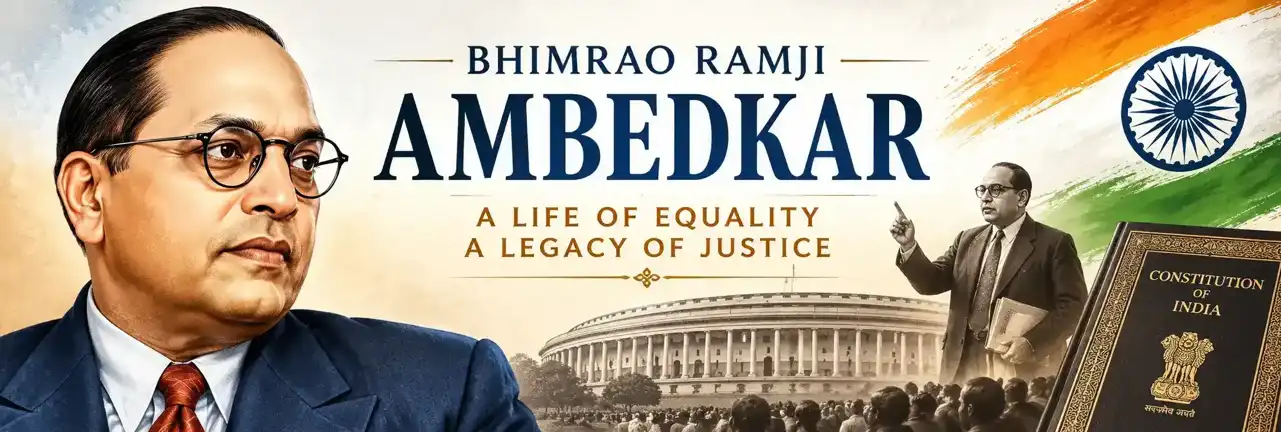
| Dr. Babasaheb Ambedkar: Writings and Speeches Volume 1 — A representative image. |
File Information
| Document Information | Details |
|---|---|
| Title | Dr. Babasaheb Ambedkar : Writings and Speeches |
| Article Credit | Vol.: 1, Year: 1979, (Pubd in: Archive.org) |
| Author | Vasant Moon (Compiled by) |
| Subject | A collected volume of Ambedkar's writings on caste, endogamy, linguistic states, constitutional reform, and economic questions, with the full text of Castes in India and Annihilation of Caste. |
| Category | Collected Works |
| Institution | Dr. Ambedkar Foundation, Ministry of Social Justice & Empowerment, Govt. of India |
| Country of Publication | India |
| Main Topics | caste system in India, endogamy and exogamy, Annihilation of Caste, Brahmin social dominance, linguistic states, constitutional reform, widowhood and girl marriage, economic problems in India |
| Number of Pages | 516 |
| Language | English |
| File Type | |
| File Size | 8.27 MB |
Summary Note of this Document
Dr. Babasaheb Ambedkar : Writings and Speeches
Dr. Babasaheb Ambedkar : Writings and Speeches Volume 1 brings together key texts on caste, social reform, and political restructuring in India. The opening section prints Castes in India: Their Mechanism, Genesis and Development, where Ambedkar argues that caste should be understood as an enclosed class system and that endogamy is its central mechanism. He connects the maintenance of caste to practices such as Sati, enforced widowhood, and girl marriage, and he treats imitation and excommunication as forces in caste formation and spread. The volume also presents Annihilation of Caste with a reply to Gandhi, showing Ambedkar's sustained attack on the religious and social foundations of caste Hindu society. Beyond caste, the contents include essays on Maharashtra as a linguistic province, checks and balances, thoughts on linguistic states, constitutional reforms, communal deadlock, states and minorities, and economic questions such as small holdings in India. The prefaces and contents frame the book as a collected edition meant to preserve and circulate Ambedkar's arguments on justice, equality, fraternity, and social transformation.
Core Themes
- caste as an enclosed social system
- endogamy as the mechanism of caste
- critique of religious sanction
- social reform and anti-caste politics
- constitutional and provincial reorganization
Keywords
About Dr. B. R. Ambedkar
Bhimrao Ramji Ambedkar was born in 1891 as the fourteenth and youngest child of an army Subedar in Mhow. Born into the Mahar caste, which was considered untouchable, Bhimrao faced many hardships at school. He had to sit on a gunny sack that he brought from home. He was not allowed to touch the water vessel or cup, so he could drink water only when the school peon was present to pour it for him. He later described this experience with the words, “No peon, no water.” His mother died when he was very young, and he had a difficult childhood. However, he was the only one of his siblings to pass his examinations and continue to high school, becoming the first person from his community to attend Elphinstone College. With a scholarship from the Maharaja of Baroda, he went on to study at Columbia University and the London School of Economics. He earned doctorates in economics and trained as a barrister at Gray’s Inn. According to the account supplied for this biography, his books were lost when his ship was torpedoed during the First World War.
Despite his education, Ambedkar continued to face prejudice. When he returned to India, he was required to work in Baroda but had to leave the position because of discrimination. His business providing investment consultancy failed when clients learned that he belonged to a community considered untouchable. While working as a professor in Mumbai, his colleagues objected to the idea of him sharing a water jug with his students. These experiences helped spur his activism. He established newspapers to give a voice to marginalized people. He led the Mahad Satyagraha, asserting Dalits’ right to collect water from a public tank, and publicly burned the Manusmriti in 1927. In 1932, he negotiated the Poona Pact with Mahatma Gandhi. Although it involved a difficult compromise, the pact provided reserved seats in legislatures for the Depressed Classes. Ambedkar was outspoken in public life but private by nature. His wife Ramabai died in 1935, and he filled his home in Bombay with a large personal library reported to contain more than 50,000 books. He declared, “I am born a Hindu, but I will not die as one.”
During the period of Indian independence, Jawaharlal Nehru invited Ambedkar to become India’s first Law Minister. Ambedkar chaired the Drafting Committee that prepared the Constitution of India, which abolished the practice of untouchability and established civil liberties and constitutional safeguards, including reservations for historically oppressed communities. He acknowledged the contribution of other constitutional experts, including B. N. Rau, who had prepared an earlier draft. Because of his poor health, including diabetes, Ambedkar married Savita, a doctor who cared for him. In October 1956, he converted to Buddhism in Nagpur along with a vast gathering of followers, commonly estimated at around half a million. He died in his sleep just weeks later, shortly after completing his final major work, The Buddha and His Dhamma. He was posthumously awarded the Bharat Ratna in 1990. His message, “Educate, agitate, organise,” continues to inspire people seeking equality and social justice.
Complete Ambedkar Research Collection
Download the entire collection of Ambedkar research PDFs available on HISTORY MARG