 |
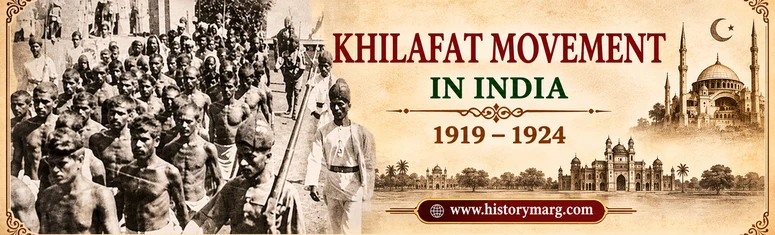
| Braahmadatthan Nambuthiri and the Khilafat Movement in Malabar — A representative image. |
File Information
| Document Information | Details |
|---|---|
| Title | Braahmadatthan Nambuthiri and Khilafat |
| Article Credit | (Pubd in: Academia.edu) |
| Author | Hussain Randathani |
| Subject | The life of Mozhikkunnath Brahmadathan Nambootirippad (1897-1964), a Brahman landlord of Malabar who led the local Congress and Khilafat committees and was jailed during the Khilafat struggles of Malabar. |
| Category | Khilafat Movement in Malabar |
| Country of Publication | India |
| Main Topics | Early life in Cherpulassery, Reform and politics from 1918, Khilafat Committee and National Congress Committee leadership, Arrest on false charges after the Malabar rebellion, Life in jail and later reform work |
| Number of Pages | 7 |
| Language | English |
| File Type | |
| File Size | 181.6 KB |
Summary Note of this Document
Braahmadatthan Nambuthiri and Khilafat
This paper is a biographical sketch of Mozhikkunnath Brahmadathan Nambootirippad (1897-1964), a Brahman landlord of Malabar who belonged to the patrician Atyan class of Brahmins. He was born in 1897 to Narayanan Somayajippad and Savithri Adithirippad in the village of Cherpulassery, now in Palakkad district of Kerala. After a traditional education, in which he became well versed in Vedic literature, he became active as a reformer and politician in 1918. The paper explains that he was arrested during the Khilafat struggles of Malabar on false accusations that he was one of the kingpins of the rebellion. In fact, it says, he led the local National Congress Committee and the Khilafat Committee and was a true follower of Mahatma Gandhi. He was arrested and suffered hardships in jail, and after his release he continued his work as a reformer. The text discusses the accusations at length and uses newspaper reports and contemporary writing from North India, written in Hindi and English, to show how the Malabar events were reported outside Kerala. The paper is seven pages long. It is useful for readers who want to see the Khilafat Movement through the career of a Hindu leader in Kerala, since most accounts of the movement and of the Malabar events concentrate on Muslim leaders.
Core Themes
- A Hindu leader of the Khilafat Committee in Malabar
- Arrest on false accusations after the rebellion
- Loyalty to Gandhi and the Congress
- Social reform in Kerala
- Press reports of the Malabar events
Keywords
About the Khilafat Movement in India
From 1919 to 1922, there was a political campaign by the Muslims of British India, known as the Khilafat Movement, in opposition to the British Indian policies about Turkey and the dismemberment of the Ottoman Empire after the end of the First World War. The Ottoman sultan was also the caliph or religious head of Sunni Muslims globally and many Indian Muslims became concerned for the caliphate as the Allied forces moved against Turkey. Through the Treaty of Sèvres (1920), lands like Palestine, Syria, Lebanon, and Iraq were taken from the empire. While there were protests throughout the Muslim world, the most intense were in India.
Among the leaders were Maulana Mohammad Ali Jauhar, Maulana Shaukat Ali, Hakim Ajmal Khan, Maulana Abul Kalam Azad, Dr. M. A. Ansari and Hasrat Mohani. They set up an All India Khilafat Committee in Lucknow and in 1920 released a Khilafat Manifesto, which urged the British to safeguard the Khilafat. The same year the leaders of the Khilafat Movement allied themselves with the Indian National Congress. Mahatma Gandhi and the leaders of the Khilafat Movement made a pact to work together for the Khilafat cause and for Swaraj. The leaders of Congress like Vallabhbhai Patel and Bal Gangadhar Tilak also gave their support.
The Khilafatists also joined in on the Non-Cooperation Movement, which was a mass non-violent civil disobedience nationwide campaign, which began with a boycott of the legislative councils, government schools and colleges, foreign goods and government functions with the surrender of titles. Gandhi and the Ali brothers were then arrested. Some individuals from the North-West Frontier Province embarked on a protest emigration to Afghanistan, and Indians contributed funds, including one to the Ankara government of Mustafa Kemal. The movement came to an end in 1922 when the Non-Cooperation movement ended. Turkey's secular republic then abolished the caliphate itself in 1924.
From 1919 to 1922, there was what is perhaps seen as the apogee of Hindu-Muslim unity. In India, the period of the movement is identified as an era of the height in the history of civil disobedience, though some questioned if a campaign centered around the Ottoman caliphate might suit a movement for the unity of India. After the movement declined, the leadership was divided. Ata Ullah Shah Bukhari would later establish the Majlis-e-Ahrar-e-Islam, Dr Ansari, Azad, and Hakim Ajmal Khan remained with Gandhi and the Congress, and the Ali brothers entered the Muslim League. Jinnah quit the Congress once his admonitions about the hazards of integrating the caliphate cause with the nationalist movement were ignored.
Complete Khilafat Movement Research Collection
Download the Complete Collection of Khilafat Movement Research PDFs Available on HISTORY MARG